A women-led, faith-inspired NGO, rooted in Nigeria

We work alongside communities to safeguard vulnerable individuals, build resilient futures, and enable safe, dignified, and lasting opportunities for growth and self-reliance.

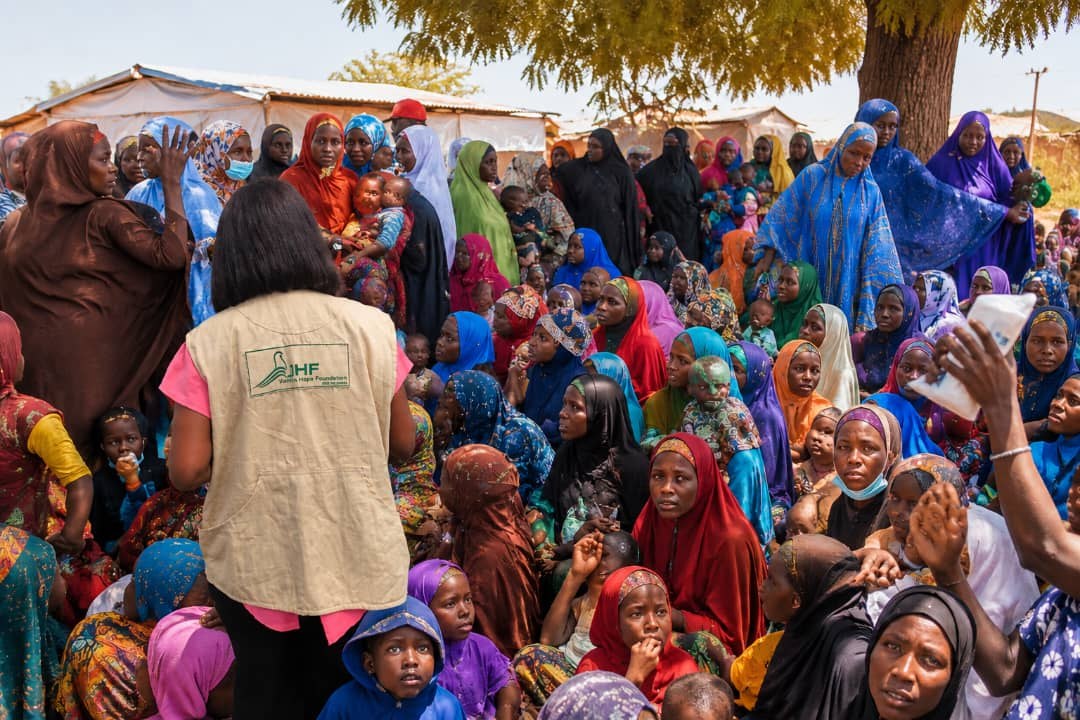
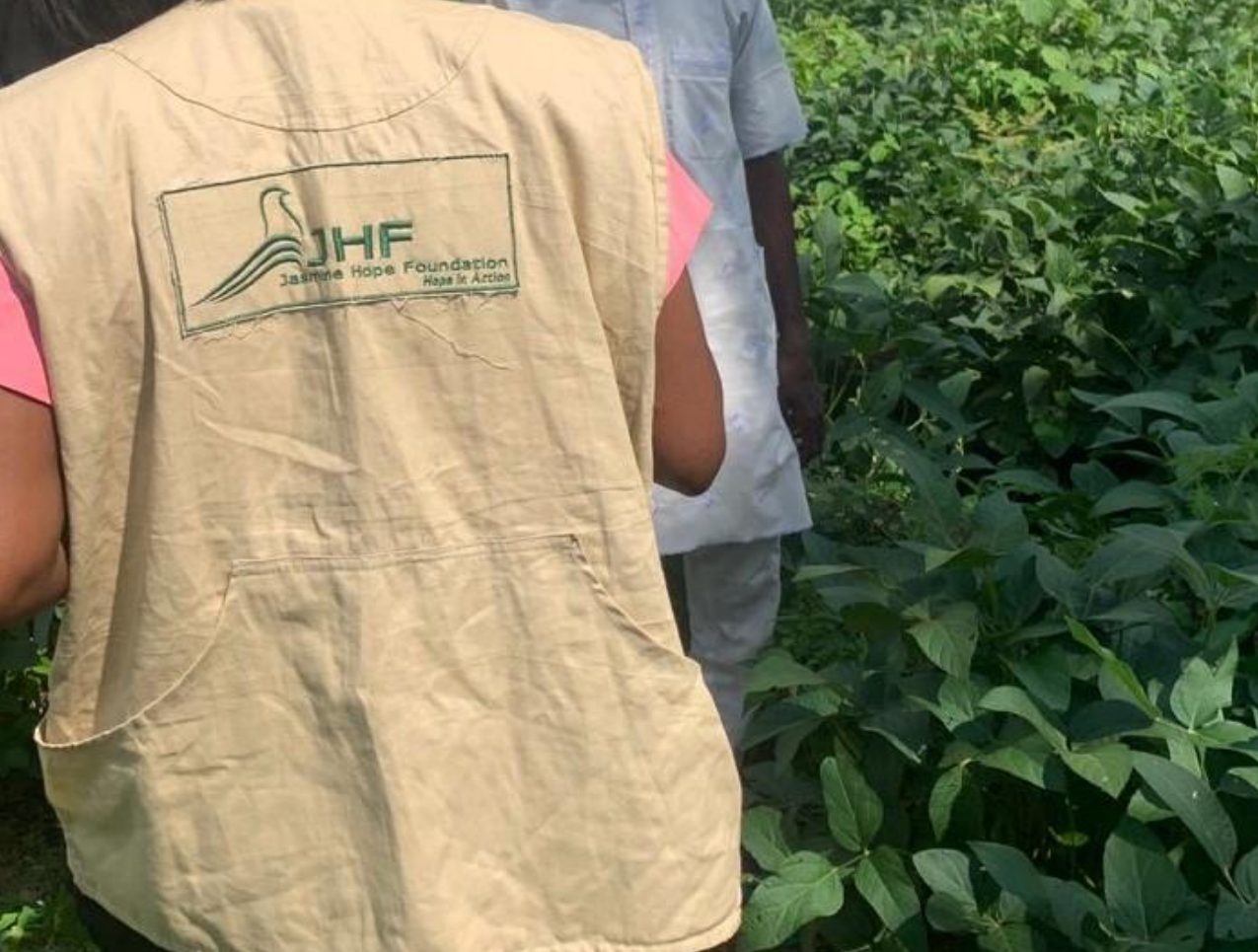
A Jasmine Hope Foundation team member in a JHF vest stands among a large gathering of women and children seated under a tree.
A JHF team member meets women and children at a community gathering.
A woman stands in front of a group of school children.
Every child deserves the chance to learn and grow.
A group of young women holding books.
Education and skills open up choices.

Hope isn’t just a feeling. It’s the belief that a safer, healthier, more dignified future is possible, and the willingness to help build it together.

Who we are

Jasmine Hope Foundation (JHF) is a women-led, faith-inspired Nigerian NGO working alongside communities to protect people at risk, build resilience, and open up real pathways to opportunity. Our work spans Northeast, Northwest, Northcentral and all areas that are vulnerable in Nigeria and beyond, with a particular focus on women, girls, children, older persons, people with disabilities, and other groups who are too often left behind.

We go where vulnerability, poverty, exclusion, violence, climate pressure, and lack of access to basic services all meet at once, because that’s usually where the need is greatest.

We believe change lasts when it starts with people themselves: their voices, their dignity, their knowledge, and their own capacity to shape what comes next.

Founded
2022
Formally registered
2025
Leadership
Women-led, faith-inspired
Roots
Across Nigeria

Our mission

To restore dignity, strengthen resilience, and create real opportunity for people and communities who need it most.

We work with communities, government, civil society, development partners, and the private sector to get at the root causes of violence, inequality, exclusion, and poverty, not just the symptoms. Through locally-led solutions, solid evidence, strong partnerships, and a willingness to try new approaches, we help people access protection, healthcare, education, livelihoods, and the everyday services that let them thrive.

Our vision

A future where everyone is safe. Where every woman and girl can live with dignity and choice. Where every child can learn and grow. Where every community has what it needs to build a better tomorrow.

We’re working toward communities where no one is left out, every voice counts, rights are protected, and hope has room to grow into something lasting.

Our faith foundation

Called to serve. Rooted in love. Grounded in the Word.

Jasmine Hope Foundation is a faith-based organisation. Our work is inspired by the conviction that every person is made in the image of God and carries inherent worth and dignity. Scripture calls us to act, not merely to feel compassion, but to put that compassion into practice for the vulnerable, the forgotten, and the oppressed.

“The Spirit of the Sovereign LORD is on me… to bind up the brokenhearted, to proclaim freedom for the captives… to comfort all who mourn… to bestow on them a crown of beauty instead of ashes, the oil of joy instead of mourning.”

Isaiah 61:1–3

This passage anchors our identity: restoring dignity, building hope, and creating opportunity are, for us, an act of faith lived out in service.

Other scriptures that guide our principles and programmes

  • “He has shown you, O mortal, what is good. And what does the LORD require of you? To act justly and to love mercy and to walk humbly with your God.”

    Micah 6:8
  • “Religion that God our Father accepts as pure and faultless is this: to look after orphans and widows in their distress and to keep oneself from being polluted by the world.”

    James 1:27
  • “Speak up for those who cannot speak for themselves, for the rights of all who are destitute. Speak up and judge fairly; defend the rights of the poor and needy.”

    Proverbs 31:8–9
  • “Carry each other’s burdens, and in this way you will fulfil the law of Christ.”

    Galatians 6:2

While JHF is guided by these convictions, we serve all people with equal dignity and respect, regardless of faith, ethnicity, or background, and we do not condition assistance on religious participation.

We turn what communities need into things that actually work.

In many underserved communities, people aren’t facing one problem. They’re facing several at once.

  • A girlmight be dealing with violence and unable to stay in school.
  • A womanmight need protection, healthcare, and a way to earn a living, all at the same time.
  • A familydisplaced by conflict or flooding might need clean water, food, income, and emotional support.
  • A childmay need to learn while also needing protection from abuse, access to healthcare, and proper nutrition.
  • A communityhit by climate change might need new ways to grow food, manage waste, and protect their environment.

These problems are connected, so our response has to be too.

That’s why JHF brings protection, health, education, livelihoods, resilience, and community development together, instead of treating them as separate boxes to check.

A group of children sitting together on the ground.

Our areas of impact

Seven connected areas of work, delivered together rather than one at a time.

Protection & dignity

Making communities safer and strengthening the systems that protect people from violence, abuse, exploitation, and discrimination.

  • GBV prevention and response
  • Child protection
  • Legal aid
  • Housing and property support
  • Safeguarding
  • Stronger local protection systems

From communities.
With communities.
For lasting change.

We don’t believe in showing up with solutions designed somewhere else and handing them over. We listen first.

We learn from what people already know and have lived through. And we work side by side with communities to figure out priorities, design solutions together, test what actually works, and build the local capacity to keep it going.

  • Community-led

    Communities sit at the center of decisions that affect their own lives.

  • Rights-based

    We stand for dignity, equality, inclusion, and access to basic rights and services.

  • Evidence-informed

    We rely on data, research, and honest learning to understand needs and improve what we do.

  • Partnership-driven

    We work with government, communities, civil society, private-sector partners, and local networks, because no one does this alone.

  • Locally rooted

    We build on local knowledge, local leadership, and systems that already exist.

  • Sustainability-focused

    We look for solutions that can outlast any single project or funding cycle.

Our theory of change

We believe change builds step by step.

  1. 1

    Protection creates safety and dignity

  2. 2

    Access to services improves health

  3. 3

    Education and skills open up choices

  4. 4

    Livelihoods strengthen households

  5. 5

    Community leadership creates ownership

  6. 6

    Partnerships make it all sustainable

The result: stronger, safer, more resilient communities where people can actually thrive, not just survive.

Who we serve

We focus on people facing the greatest barriers to safety, dignity, and opportunity.

  • Women and girls
  • Children and adolescents
  • Older persons
  • Persons with disabilities
  • Displaced and crisis-affected populations
  • Vulnerable households
  • Young people
  • Underserved rural and hard-to-reach communities

Vulnerability rarely comes in one form. Our programmes are designed to reflect that.

Children sitting together on a wooden bench.

Rooted in Northeast Nigeria. Working across the North and the Lake Chad Region.

Our roots are in Northeast Nigeria, where communities are dealing with displacement, poverty, protection risks, climate change, and limited access to services, often all at once.

From here, our work now reaches across the Northeast, Northwest and Northcentral regions of Nigeria and the Lake Chad Region, while we build models that can be adapted wherever they’re needed.

Maiduguri office
Borno State
Katsina office
Katsina State
Sokoto office
Sokoto State

Our commitment to the SDGs

Our work speaks directly to eight of the UN Sustainable Development Goals.

  • SDG 2: Zero hunger

    Zero hunger

    Food security, nutrition and resilient livelihoods

  • SDG 3: Good health and well-being

    Good health and well-being

    Health, mental health and wellbeing services

  • SDG 4: Quality education

    Quality education

    Inclusive and equitable learning opportunities

  • SDG 5: Gender equality

    Gender equality

    GBV prevention and women’s leadership

  • SDG 6: Clean water and sanitation

    Clean water and sanitation

    Safe water, sanitation and hygiene

  • SDG 10: Reduced inequalities

    Reduced inequalities

    Inclusion and opportunity for underserved populations

  • SDG 13: Climate action

    Climate action

    Climate resilience and environmental sustainability

  • SDG 16: Peace, justice and strong institutions

    Peace, justice and strong institutions

    Protection, justice and peace

The content of this website has not been approved by the United Nations and does not reflect the views of the United Nations or its officials or Member States.

Feasibility study · October 2026

Positioning JHF for humanitarian response in Northeast Nigeria

An independent study of how well JHF’s strategy fits the region’s most pressing needs, and what it will take to scale.

Commissioned by JHF and carried out by our research partner Voices and Evidence Frontiers, the study reviewed the 2026 humanitarian needs picture, Borno and Adamawa State development plans, JHF’s own strategy and policies, and consultations with JHF staff, humanitarian coordination professionals and a UN/institutional donor representative. Its conclusion: JHF is feasible, with priority institutional strengthening.

29 pages · PDF · Commissioned by Jasmine Hope Foundation · Executed by Voices and Evidence Frontiers

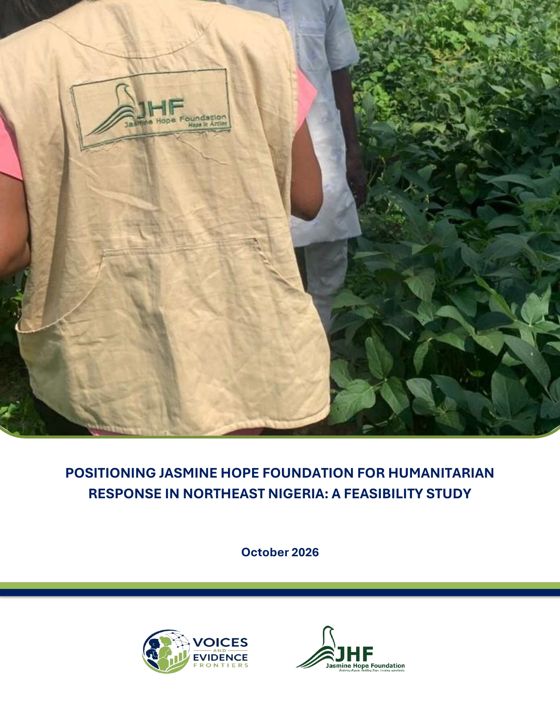
Cover of the report: Positioning Jasmine Hope Foundation for Humanitarian Response in Northeast Nigeria: A Feasibility Study, October 2026.

2026 Northeast Nigeria humanitarian needs at a glance

  • 5.9 millionpeople in need of humanitarian assistance across Borno, Adamawa and Yobe
  • 5.8 millionneed food security interventions
  • 4.1 millionneed nutrition interventions
  • 3.3 millionneed protection assistance
  • 1.6 millionneed education support

Figures as cited in the feasibility study, from the UNOCHA Nigeria 2026 Humanitarian Needs and Response Plan.

What the study found

  • Strong alignment

    JHF’s focus areas, from GBV and child protection to livelihoods, climate-smart agriculture and education, map directly onto the humanitarian sectors and state recovery priorities in Borno and Adamawa.

  • Clear strategic value

    As a women-led, faith-based national organisation with a Humanitarian-Development-Peace (HDP) Nexus approach, JHF is well placed for the localisation agenda.

  • Foundations in place

    Policies already cover governance, financial management, procurement, safeguarding, data protection and MEAL.

  • Gaps to close

    Documentation, MEAL and communication systems need strengthening, so that policies become consistent practice and JHF can show its impact to donors.

Self-funded work recognised in the study

  • Psychosocial support for children affected by conflict in Mubi North, Adamawa State
  • Psychosocial activities for adolescent girls in Shuwari, Adamawa State
  • An education project in Yola North with learning materials and protection sensitisation
  • Support to the Adamawa GBV Working Group for the 16 Days of Activism and Menstrual Hygiene Day

Nine recommendations, one roadmap

Engaging humanitarian action

  1. Align interventions with the OCHA-coordinated humanitarian sectors and plans
  2. Target severely affected, underserved communities and avoid duplication
  3. Institutionalise cluster collaboration through 5W reporting and sector meetings

Strategic alignment and local operations

  1. Define an HDP Nexus pathway from immediate response to long-term development and peace
  2. Build a partnership and resource mobilisation strategy
  3. Operationalise evidence-based reporting and strategic communication

Institutional credibility

  1. Get ready for due diligence and Partner Capacity Assessments
  2. Execute a “Policy to Practice” operational roadmap
  3. Develop an institutional risk matrix for safety and safeguarding

The goal: move from a promising grassroots actor to a credible, grant-ready humanitarian partner, delivering at scale across Borno and Adamawa States.

Download the report

Change is bigger than any one organisation.

Our partnership model brings together the people and institutions that each hold a piece of the answer.

New partner October 2026

Welcome, Voices and Evidence Frontiers

JHF has partnered with Voices and Evidence Frontiers (VEF), who delivered our 2026 feasibility study. VEF says the findings establish JHF as an organisation with strategic relevance and deep grassroots credibility for humanitarian action in Northeast Nigeria, and give JHF a clear blueprint for delivering its mandate sustainably.

Communities
Local leaders, women, youth and people with lived experience
Government
Ministries, departments, agencies and local institutions
Civil society
Local and international NGOs and networks
Development partners
Donors, foundations and technical partners
Private sector
Businesses and social enterprises
Academic and research institutions
Partners in evidence and innovation
Faith communities
Churches, mosques, and faith networks committed to compassionate service

If you bring knowledge, resources, networks, or new ideas that can help communities move forward, we want to talk.

Start a conversation

Our principles

  • Dignity

    Everyone deserves to be treated with respect.

  • Inclusion

    Everyone deserves a voice and a fair chance to participate.

  • Accountability

    We answer to the people and communities we serve.

  • Integrity

    We act transparently and ethically.

  • Local leadership

    Communities own the solutions that shape their lives.

  • Learning

    We listen, measure, and keep improving.

  • Do no harm

    Safety and safeguarding come first, always.

From projects to lasting systems.

We’re not trying to just deliver more projects. We’re trying to build models that communities and institutions can carry forward long after we’re gone.

That means identifying what leaves people behind, listening to what communities actually need, designing practical solutions, testing them, learning from the results, partnering with institutions that can sustain the work, and scaling what proves to work.

Our goal isn’t more programmes. It’s stronger communities and systems that keep delivering results on their own.

A group of people celebrating together outdoors.

At Jasmine Hope Foundation, hope only means something when it turns into action.

  • A girl who’s protected.
  • A woman who can lead.
  • A child who can learn.
  • A family with clean water and enough food.
  • A young person with real skills and real options.
  • A community ready for the next climate shock.
  • A survivor who can find justice and support.
  • A person with a disability who’s included, not overlooked.

These aren’t just numbers on a report. They’re what hope looks like when it’s real.

News and press

Updates from the field, current issues we’re responding to, and press.

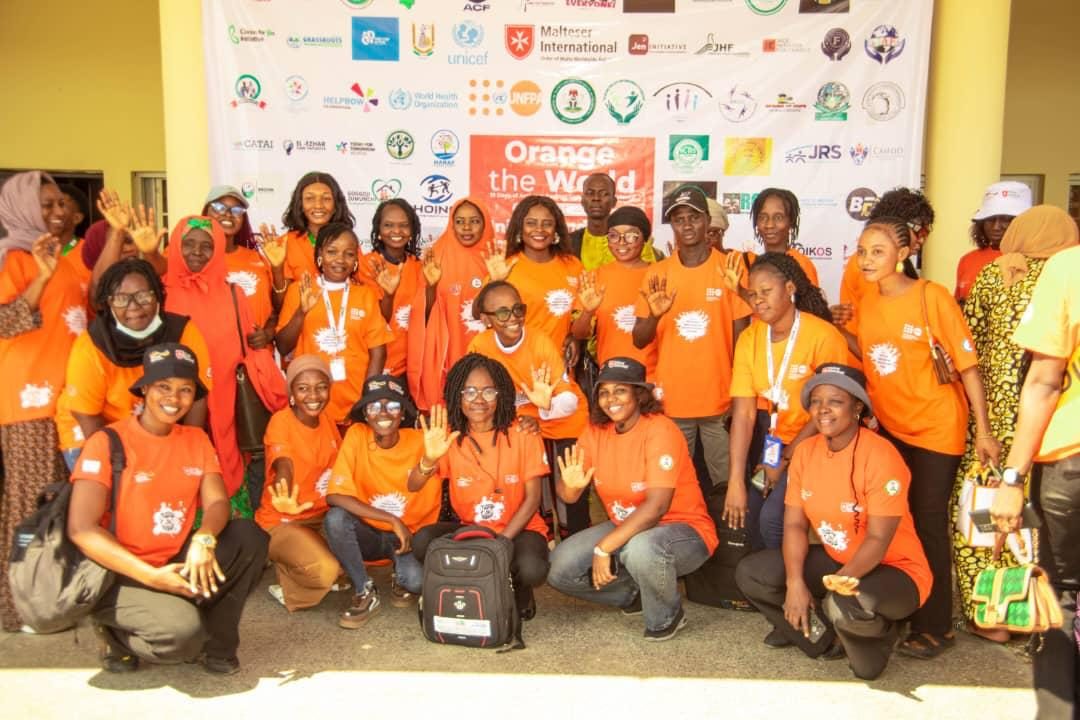
JHF staff and partner organisations in orange T-shirts raising their hands in front of an Orange the World banner.

JHF joins Adamawa State for the 16 Days of Activism Against Gender-Based Violence

Under the 2025 theme “Unite to End Digital Violence against all Women and Girls”, JHF took part in the Orange the World campaign alongside the Adamawa State Ministry of Women Affairs and Social Development, the GBV Sub-Sector, the Office of the First Lady and UNFPA: from the opening ceremony and press briefing to school outreach and community sports activities.

See the photos

Hope in action.

  • Partner with us

    Bring your organisation’s knowledge, networks or resources to work that communities lead.

    Propose a partnership
  • Support our work

    Fund protection, health, education and livelihoods where the need is greatest.

    Talk to us about giving
  • Build change with us

    Offer your time and skills as a volunteer, or join the team.

    Offer your skills

Make an enquiry

Tell us who you are and how you’d like to work with us. Your enquiry reaches the JHF team by email and on WhatsApp, and a real person replies.